Updated Date: Jan 22, 2026
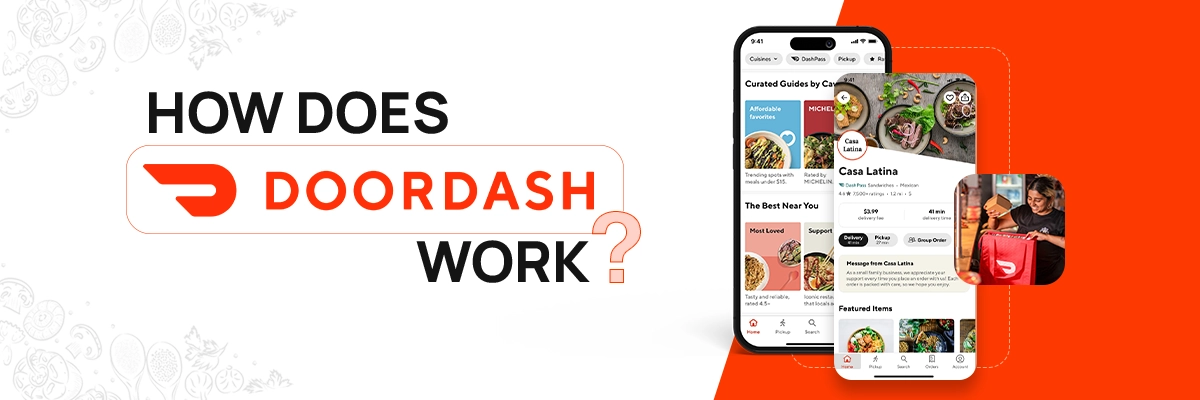
Before DoorDash created its place in every household, it was a simple idea aimed at solving a very basic restaurant problem: how can local restaurants reach more customers without handling logistics and building their own delivery system? Today, DoorDash is a leading food delivery app in the U.S. market with a share of 68% and is also dominating globally with millions of orders daily. For startups, restaurant owners, and on-demand app builders, the real value lies in understanding how does doordash work behind the scenes.
At aPurple, we work closely with food delivery-based startups, and we see a common pattern. Many founders admire DoorDash’s scale but do not consider the complexity of its three-sided ecosystem. Restaurants, drivers, and users each interact with the platform in a different way, yet every action is smooth and tightly connected. That’s why, after discussing with our experts, we have created this guide to break down how DoorDash works for all three stakeholders and what startups can learn before building or investing in a similar model.
What Is DoorDash and How Does It Work
DoorDash is a popular food delivery platform liked by many users globally. It is a three-sided digital marketplace developed to connect restaurants, delivery drivers, and customers through a single platform. DoorDash operates differently from traditional delivery services; it is not limited to logistics operations. In fact, it becomes a technology layer that seamlessly coordinates demand, supply, and fulfillment in real time.
- Customers can browse restaurants in nearby locations, view menus, and place orders through the DoorDash app or website.
- The orders placed by customers are directly sent to the restaurant for confirmation and preparation.
- DoorDash’s system identifies an available driver (Dasher) to deliver the order based on location, timing, and delivery efficiency.
- The assigned Dasher receives pickup details with navigation to the restaurant, meanwhile the restaurant prepares the order, and after completing it, hands it off to the driver at pickup time.
- Throughout the entire process, customers can track their orders in real time from preparation to final doorstep delivery.
- The payment for the order can be processed within the platform and distributed to restaurants and drivers.
- The DoorDash app admin manages notifications, routing, support, and order status updates throughout the complete process.
Read Also: DoorDash vs. Uber Eats
How Does DoorDash Work for Restaurants
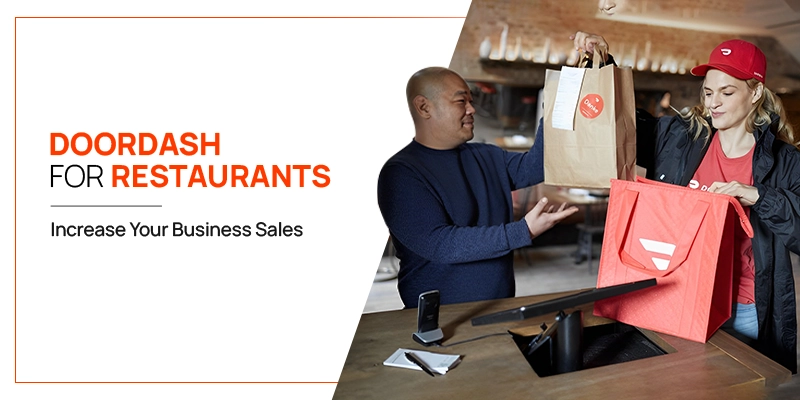
The key concept of DoorDash is to help restaurants extend their reach beyond their physical reach by becoming a digital-first seller among food delivery apps. Instead of struggling with the delivery logistics independently, restaurants get into DoorDash’s marketplace and focus on food preparation, while the platform handles demand and fulfillment. Let’s understand step by step how does Doordash algorithm works for restaurants.
1. How to Do Restaurant Onboarding and Setup in the DoorDash Platform?
Getting restaurants listed on DoorDash is perfectly designed and leads to a fast and operationally lightweight process. Here’s the onboarding process and other control details:
Restaurant Onboarding Steps Typically Include:
- The restaurants have to do online partner registration with their business and banking details.
- Digitalizing menu details requires item lists, descriptions, and their images.
- It also asks for information such as the configuration of delivery zones, hours, and order capacity.
Menu and Pricing Control Steps:
- Restaurants have access to set their food prices independently for the delivery and pickup system.
- Item availability can be shown to customers in real time.
- The restaurant owner’s dashboard directly allows promotions and featured item management.
System Integration in the DoorDash Platform:
- The POS integrations in the DoorDash platform allow automatic order syncing for restaurants.
- The real-time updates and dashboard accessibility reduce manual entry errors and kitchen delays.
- DoorDash’s system is built to support smoother operations when order volume is high.
2. What’s DoorDash’s Order Management Workflow for Restaurants?
After getting onboard and going live on the DoorDash platform, restaurants follow a structured order-handling flow developed to minimize delays and improve efficiency.
Order Management in Normal Hours:
- Step 1: Whenever a customer places an order, a notification appears on the restaurant dashboard or POS.
- Step 2: The restaurant reviews the order details and then confirms or denies it.
- Step 3: If the restaurant accepts the order, then preparation time is set to match the kitchen capacity.
- Step 4: Meanwhile, with the restaurant’s confirmation, the DoorDash system assigns a driver for order pickup with location details.
- Step 5: When the order is prepared, it’s handed off to the Dasher.
Order Management in Peak Hours:
- Restaurants have the authority and access to pause orders temporarily.
- The order preparation times can also be adjusted dynamically.
- An order throttling system in DoorDash helps in preventing kitchen overload.
3. What’s DoorDash’s Revenue Model and Fee Structure With Restaurants?
DoorDash business model earns revenue from restaurants by charging for access given to its marketplace and delivery network. Here’s the type of fees that can be collected by DoorDash from the restaurant owners.
DoorDash’s Revenue Model and Fees With Restaurants
| Fee Type | Details |
|---|---|
| Commission Fee | There is a percentage allotted to each order, which varies by the plan taken. |
| Delivery Fee | The delivery fee is paid by customers, which partially supports logistics. |
| Service Fee | There are significant charges for platform and operational services. |
| Promotional Fees | This one is optional; restaurants can choose it to increase their visibility. |
What’s the Impact on Restaurant Margins?
- If the order volume is higher than usual, then it can easily offset the commission costs borne by restaurants.
- Restaurants mostly adjust the menu pricing for delivery orders to gain good margins.
- The restaurant’s profitability depends on the order frequency and operational efficiency it has.
How Does DoorDash Work for Drivers (Dashers)
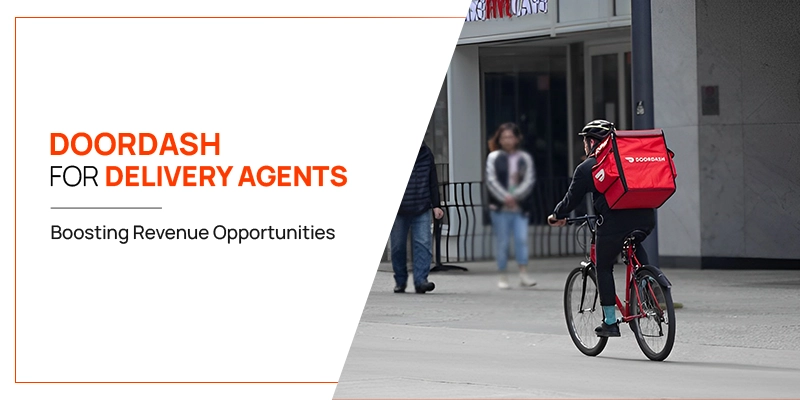
The DoorDash platform is completely dependent on independent drivers to successfully complete delivery tasks. Their drivers are generally known as Dashers among people. The DoorDash system is built to make quick onboarding, assign orders efficiently, and keep drivers active during the peak hours when demand is very high.
1. How Dasher Can Sign Up and What Are the Requirements?
Becoming a Dasher for the DoorDash platform is a very simple and barrier-free process.
Sign-up Steps for Dashers:
- Need to do online registration through the dedicated Dasher app.
- There are some basic steps for identity verification and background checks.
- After that, Dasher needs to set up a working bank account to get payouts.
List of Eligibility Criteria to Become a Dasher at DoorDash:
- Mandatorily, a dasher needs a car, bike, or scooter for delivery, otherwise they have to prefer walking delivery in selected cities.
- A valid driver’s license is necessary for applicable vehicles.
- A Dasher can operate within the supported delivery zones.
This flexible eligibility of Dashers allows DoorDash to scale supply quickly across various locations.
2. How Are Orders Assigned and Delivered on DoorDash?
The on-demand business model of the DoorDash app uses real-time data of restaurants’ accepted orders to match them with available drivers in the area.
How Order Assignment Works in DoorDash?
- Step 1: The DoorDash system searches for the nearby Dashers and identifies them.
- Step 2: An order is offered to the Dasher considering the distance, demand, and estimated delivery time.
- Step 3: After receiving an order notification, drivers have the authority to accept or reject an order request.
What’s the Delivery flow of DoorDash?
- Step 1: It starts with the Dasher accepting the food delivery order.
- Step 2: DoorDash’s Dasher app provides the details of the pickup location and necessary instructions.
- Step 3: Drivers reach the pickup location through an integrated map and collect the order from the restaurants.
- Step 4: The in-app navigation system guides the delivery route to reach the customers within the estimated time.
- Step 5: After delivering the order to the customer, it can be marked as completed.
What Are the Communication Tools Available to Complete a DoorDash Order Successfully?
- DoorDash allows in-app messaging between customers and restaurants.
- An automatic status is also updated during each step.
3. How Do Earnings, Incentives, and Payouts Work for DoorDash Drivers?
DoorDash’s driver earning plans are created to encourage their availability during peak hours to manage high-demand orders efficiently. Let’s see how Dashers can earn with DoorDash.
How Do DoorDash Drivers Earn Money?
| Earnings Component | Description |
|---|---|
| Base Pay | It’s a fixed amount associated with each delivery to complete orders. |
| Tips | This one is on customers; if they want, they can add a tip for Dashers, and it is fully retained by drivers. |
| Peak Pay | This is structured to pay extra than a regular base pay during high-demand hours. |
| Bonuses | The bonus is applicable based on the order’s completion, or Dashers can get location-based incentives. |
What Are the Payout Options for Dashers?
- On a weekly basis, it can be directly deposited into Dasher’s integrated account.
- Also, an instant payout option for eligible drivers.
Ultimately, this flexible payout system helps DoorDash’s drivers manage their cash flow efficiently.
How Does DoorDash Work for Customers (Users)
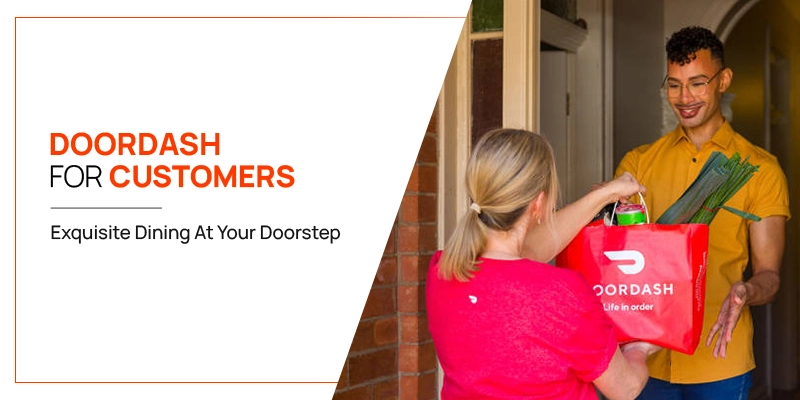
For the customer side DoorDash app, it highly prioritizes speed, choice, and transparency. Integrating top app design trends, DoorDash created a user experience that reduces friction for all the phases from friction to delivery.
1. How Do Customers Set Up an Account & Discover Restaurants on DoorDash?
Here are the steps explained to the customer-side DoorDash app for login and finding appropriate restaurants.
Start Simple With DoorDash:
- A customer can use the web platform or download the DoorDash app on their device.
- They can create a DoorDash account simply by using their valid email or phone number.
- With the successful account creation, customers can start browsing and find various restaurants based on their location.
What Discovery Features Does DoorDash Offer to Customers?
- Users can use various discovery filters integrated in the DoorDash app, including cuisine, price, delivery time, and ratings.
- An AI-powered personalized recommendation is also given to the user’s app based on their past orders.
- They can see the delivery charges applicable and the estimated time; based on this, users can decide which restaurants to order food from.
2. How Do Customers Place an Order on DoorDash?
Like finding various restaurants, placing an order with final checkout is also very simple in the DoorDash app. That’s why many startups prefer a DoorDash clone to build a food delivery app on a low budget. Let’s see the order and checkout process.
What Is the Ordering Process on DoorDash?
- After browsing restaurants and their menus, users can add items to the cart and customize their meals.
- Also, the customer can add any special instructions for each item they have ordered.
- There are multiple payment options shown to customers for making online pre-payments.
How Does the Checkout Process Work on DoorDash?
- The order summary that explains all the applicable charges and the overall fee breakdown is shown to the customers.
- After that, the DoorDash app takes the final address confirmation to deliver the order to the right place.
- One more option is given for tip selection, either choosing it or not; the customer moves to the final payment.
3. How Does Order Tracking and Delivery Work on DoorDash?
DoorDash prioritizes transparency after the final checkout is done by users. They make sure the customer does not regret ordering from the DoorDash app. Check how the post-order user experience is on the DoorDash platform.
What Is the Post-Order Experience Like on DoorDash?
- The user continuously gets the real-time order status updates after checkout.
- Live driver tracking through the map is possible in the DoorDash system.
- The customer gets the updates of each stage completion via push notifications.
What Support Features Does DoorDash Offer to Customers?
- Just in case any trouble is felt by the customer, they can use in-app help and report issues like delays or missing items.
- Customers can get refunds or credits in the app if any issues occur with the order.
What Startups Can Learn from DoorDash
DoorDash’s success is not driven by features alone. It comes from building a marketplace where three different user groups remain active, satisfied, and economically motivated at the same time. For startups entering the food delivery app development segment, the real lessons lie in system design and execution.
Designing for Multiple User Roles
DoorDash has already proven that a single app experience is not enough in a multi-sided marketplace. Each stakeholder needs a tailored journey.
- Restaurants need operational control, predictable demand, and visibility into performance.
- Drivers need clarity on earnings, minimal downtime, and efficient routing.
- Users need speed, transparency, and choice.
Startup Insight: With years of experience as a top mobile app development company, we suggest designing separate dashboards, workflows, and success metrics for each user type. Avoid building one experience and forcing all users to adapt to it.
Incentive Alignment and Retention Strategies
A marketplace only and only works when incentives are aligned across all sides. The DoorDash platform constantly adjusts its system to keep supply and demand balanced.
- Drivers are encouraged to work during peak hours through surge pricing and bonuses.
- Restaurants are incentivized with promotions and visibility during high-demand periods.
- Users receive faster deliveries when the supply is balanced.
Startup Insight: Retention is not just about rewards. It is about timing incentives correctly so one group’s benefit does not harm another. Poor incentive design leads to churn and platform imbalance.
Scaling Logistics Without Losing Experience Quality
As DoorDash scaled, logistics operations became a technology problem, not a manual one. Routing, order batching, and demand forecasting should be continuously optimized.
- Real-time data helps predict order surges.
- Automated driver assignment reduces delivery delays.
- Dynamic preparation times prevent kitchen overload.
Startup Insight: Manual operations may work at launch, but scalable platforms require automation early. Create an app that adapts to growth rather than reacting to it.
Challenges DoorDash Faces at Scale (and How They Can Be Addressed)
Even becoming the most popular food delivery app and scaling continuously, DoorDash also faces structural challenges that every marketplace startup should understand before investing heavily.
1. Profitability Pressure
The DoorDash platform works on very thin margins due to expensive heavy logistics, driver payouts, customer incentives, and commission resistance from restaurants. All these discussed causes lead to low profits and make earning challenging for a DoorDash-like app.
Potential Solution: As a leading startup consulting company for years, we suggest expanding profit margin with services such as subscription and advertising. Additionally, encouraging pickup and scheduled orders can also improve margins in an effective way.
2. Driver Retention and Regulations
For platforms like DoorDash, drivers are the backbone of the system, yet making them come on to the platform again and again is the constant challenge. Income unpredictability, increasing fuel and vehicle maintenance costs are some of the reasons that resist driver retention for food delivery apps.
Potential Solution: Give all the Dashers transparent earning estimates before they accept orders. Moreover, platforms can offer non-cash benefits such as insurance partnerships or fuel discounts, which can attract drivers to stay in the app.
3. Restaurant Dependency and Competition
More than any other revenue strategy, the DoorDash platform is highly dependent on restaurant partnerships while also competing with other delivery platforms that are not only limited to restaurants but also offer delivery services in different categories.
Potential Solution: Introducing tiered pricing as per the order volume, providing value-added services like analytics and customer insights, and enabling deeper POS integration, which reduces operational struggles and can lead to competing hard with the restaurant dependency.
Wrapping Up!
DoorDash’s success shows that food delivery platforms are not built on convenience alone. They succeed by balancing the needs of restaurants, drivers, and users through smart marketplace design, aligned incentives, and scalable logistics systems. For startups, the real takeaway is understanding how each role interacts with the system and how small operational decisions impact the entire ecosystem at scale.
For founders looking to build or scale a similar platform, choosing the right technology partner matters. As an experienced on-demand app development company, aPurple helps startups design multi-sided marketplaces that are scalable, revenue-focused, and ready for real-world demand, from idea validation to full-scale launch.
Frequently Asked Questions (FAQs)